Sunday, November 12, 2006

Magnolia and Short Cuts


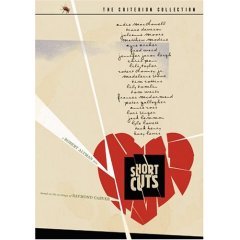
"Can't We All Just Get Along?" The much quoted and ridiculed statement Rodney King made during the LA riots of the early 90's following the trial of LA police officers that had beaten King came to mind a lot while watching Paul Anderson's Magnolia (1999) and Robert Altman's Short Cuts (1993). Both were movies I've meant to see for years but kept putting off. After watching these films back-to-back, I was reminded of two other movies: Lawrence Kasdan's Grand Canyon (1992) and recent Best Picture winner Crash (2005). Despite being made by different filmmakers at different times, each of these movies put LA under the microscope and seemed to come to the same conclusion Rodney King did: In the face of the cultural melting pot that is LA boiling over, empty sentiment is all that's left to cling to.

These four movies paint an ugly picture of life in La La land. If these four movies are to be believed as representative of the LA experience, there are certain consistencies between them that come to the foreground:
  • The perspective is told from the point of view of characters who are white middle to upper middle class. Most black people depicted are feared and possibly armed except for one couple whose function in the storyline is to represent bridging the racial gap. Oddly, in most of these movies Hispanics don't exist at all (except for Crash).
  • The thousands of people in LA all know each other or know someone who knows another that has a direct relationship to the first person. In other words, everyone in LA knows each other somehow
  • Infidelity and Murder happen all the time and is successfully covered up often (I guess OJ kinda proved that)
  • The Police force is corrupt and racist (again refer to Rodney King)
  • Everyone in LA is really stressed out and/or drugged up (common knowledge)
  • The only thing that can really bring people together is a disaster, usually an earthquake (though in Magnolia, the disaster was a rain of frogs! An original idea, but weird. 9/11 did prove this, as there was a great deal of goodwill among people across the country following that tragedy).

After watching these movies, it's hard to believe LA remains a popular tourist attraction. It's shown as stressful, seedy, amoral and desperate. All four movies do a great job of using huge, sprawling casts to show how the actions of one affects the other and how everyone bounces off each other in a societal microcosm resulting in the full range of human emotion. In each of the movies it first shows the miscommunication and frustration of people dealing with each other to wind up to the big finish where everyone helps each other. Forgiveness and redemption are often the universal themes of these films.

But, what does it all mean? Los Angeles is used in these movies as a magnifying glass to address larger societal issues affecting America in general. Many of these movies end with a tone of hopeful humanism, that everyone will see that we all are just human beings regardless of our faults and should be treated as such. And while that would be the answer I would wish for as well, I think it really just comes down to economics. As long as the majority of people believe they have gained or have the potential to gain as much wealth and comfort as others, they will tolerate each other. When they don't, such as in the early 90's during a recession, riots ensue. It's not a coincidence that much of the rioting in the United States ended when the economy picked up. This is the issue I felt was missing from all the movies.
When I saw the standard of living for many of these characters living in their sun splashed environment, I realized I wanted that too! So Los Angeles is representative of larger America, just not in the sentimental way filmmakers would like to think. A better ending to these movies would be: The sky rains a torrent of money and everyone is rich. Why? Because most of us desire gratuitous consumerism and not altruistic humanism. Is that bad? Probably. And I'm as guilty as anyone else. I think that's the ultimate lesson learned from these movies. Give us a burger and a big house on a hill and we'll like anybody.

Friday, November 10, 2006

Number 62


Back when I was in high school, there were certain bands you could always count on to populate the cut out bins all year round. There was Tom Petty, Air Supply and my favorite of the cut out bin rack at number 62...

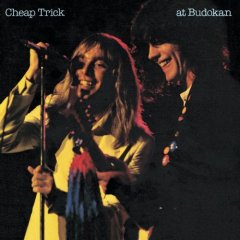
Cheap Trick - At Budokan (1977)

I collected many Cheap Trick records at a low price because they were all 3.99 or 4.99 at the time. Dream Police, One on One, Next Position Please, Standing On The Edge, The Doctor...I owned a lot of Cheap Trick. And Cheap Trick could always be counted on for having one good song per album. It wasn't a very high ratio of good songs, but the good song would be REALLY GOOD!

Such was the paradox of Cheap Trick, a puzzle that continues to this day. Their first three albums are considered classic albums though they all fizzled commercially. They recorded a live album intended solely for their Japanese fans and it became their defining American album. The followup album should have been a blockbuster but only went gold. They recorded an album with Beatles producer George Martin and managed to make a mediocre record. The only time things went as planned occurred with their "sell out" in 1988 translating into the #1 hit "The Flame". Despite their "sell out", they became revered alternative rock pioneers in the 1990's but could not use the buzz to their commercial advantage. Now that everyone has written off this band for dead, they turn around and record the excellent Rockford CD.

But in 1977, much of this had yet to happen. The first three albums were ignored in the US but inspired a Beatlemania response in Japan. Cheap Trick went to Japan and recorded At Budokan intending it for release in that country only. It became an in demand import to America which led to a domestic release and a smash album.

Why did At Budokan catch on? Because the record showed off Cheap Trick in the best light possible. The best songs from their first three albums are cherry picked onto one record. The Beatlesque melodies anchored by garage rock riffs gave the music both grit and grace. "Come On Come On" is a great example of White Album era Beatles colliding with Kinkish guitarwork. An unintentional bonus was the fact that it was a live recording. On vinyl, Cheap Trick utilized latter day Beatles production tricks like strings, piano and heavy reverb on the vocals. Live, Cheap Trick sounded raw and frantic like the early Meet The Beatles records.

The live setting and frenzied fans gave a huge boost to the solo heavy cover of Fats Domino's "Ain't That A Shame" and the rousing set closer "Clock Strikes Ten". Their two classic hits are the highlights, the first being the signature song "I Want You To Want Me". The half pleading vocal and steady beat combined with the wordplay heavy lyrics made for a memorable tune. The second classic hit is "Surrender", probably better known as the "Mommy's all right, Daddy's all right, they're just a little weird" song. The odd subject matter and almost punkish musical approach has made this song an anthem rock standard.

I played this record many times in my teenage years and still find it to be an engaging and energetic record. Although I bought the 2 cd complete concert, my favorite format of At Budokan is still the single record track listing. The consiseness of the track sequencing gave the record a thematic punch missing from the whole show. Cheap Trick has proven time and again they can never go back to 1977, but fortunately '77 has been recorded for everyone else for all time.

Sunday, November 05, 2006

Plan 9 From Outer Space and Ed Wood


Ed Wood has historically been considered the worst director of all time and his film Plan 9 From Outer Space the worst movie ever. This past Halloween, I finally got to see the evidence. I can't honestly say Plan 9 is the worst movie I've ever seen (that would be Wise Guys, I paid a dollar to see it and still walked out of the theatre) but can see where the suggestion comes from. If this movie is to be taken seriously, it's horrible. But, if viewed as something made with honest intentions and failing so badly it becomes a joke, then it's pretty entertaining!

Plan 9 has to do with aliens resurrecting the dead to kill the living to keep mankind from creating a weapon powerful enough to destroy the universe...someday. The acting is uniformly bad and amateurish. The sets are made of cardboard and are reused repeatedly with very little redecoration. Bela Lugosi died before the movie was made and a blatant stand in is used to fill in for most of the movie.

On top of this, the flying saucers are plates on visible strings. The scenes switch from day to night and back to day in seconds. The pacing is leaden. The whole concept of the movie is ridiculous. So, what makes this movie watchable?

Two things. One is you keep waiting to see what will go wrong next. It's great to view this and tally all the errors in the movie. And secondly, appreciation of the moxie it took to get this movie made. It's not made with the intent of being bad, there's no self referential irony in this film. This lack of self awareness makes Plan 9 both funnier and more respectable at the same time. You've gotta appreciate the will to do something big acted upon, even if the result is disasterous.

This appreciation infuses Tim Burton's film Ed Wood, a biography of sorts about the director of Plan 9 from Outer Space. The movie is a fitting tribute, telling the story of Ed Wood's life with all of the trappings of Wood's movies. Johnny Depp plays Ed Wood, a cross dressing Hollywood studio grunt trying to become a director. Depp plays Wood as a nieve dreamer with an opportunistic streak. The Ed Wood depicted here wants his movies to be made, no matter what the cost in both finances and the quality of his own filmmaking.

Wood befrends an aging, dope addicted Bela Lugosi and is able to wheel and deal his way into making a few films. Through it all, Wood and his group of outsider friends ranging from wrestlers to psychics to drag queens band together to make his movies. If you see Plan 9, then see this movie to gain a better understanding of the whole thing. Tim Burton excels at making sensitive, whimsical movies about sociatal pariahs and Ed Wood is a great addition to his canon.